Best Telescopes for Kids in 2026: Real Optics, Honest Ages, No Toy Junk
Best telescopes for kids in 2026 — age-specific picks from 6 to 14, with EU prices and what each one will actually show. How to avoid the toy-shop traps that create frustration instead of wonder.
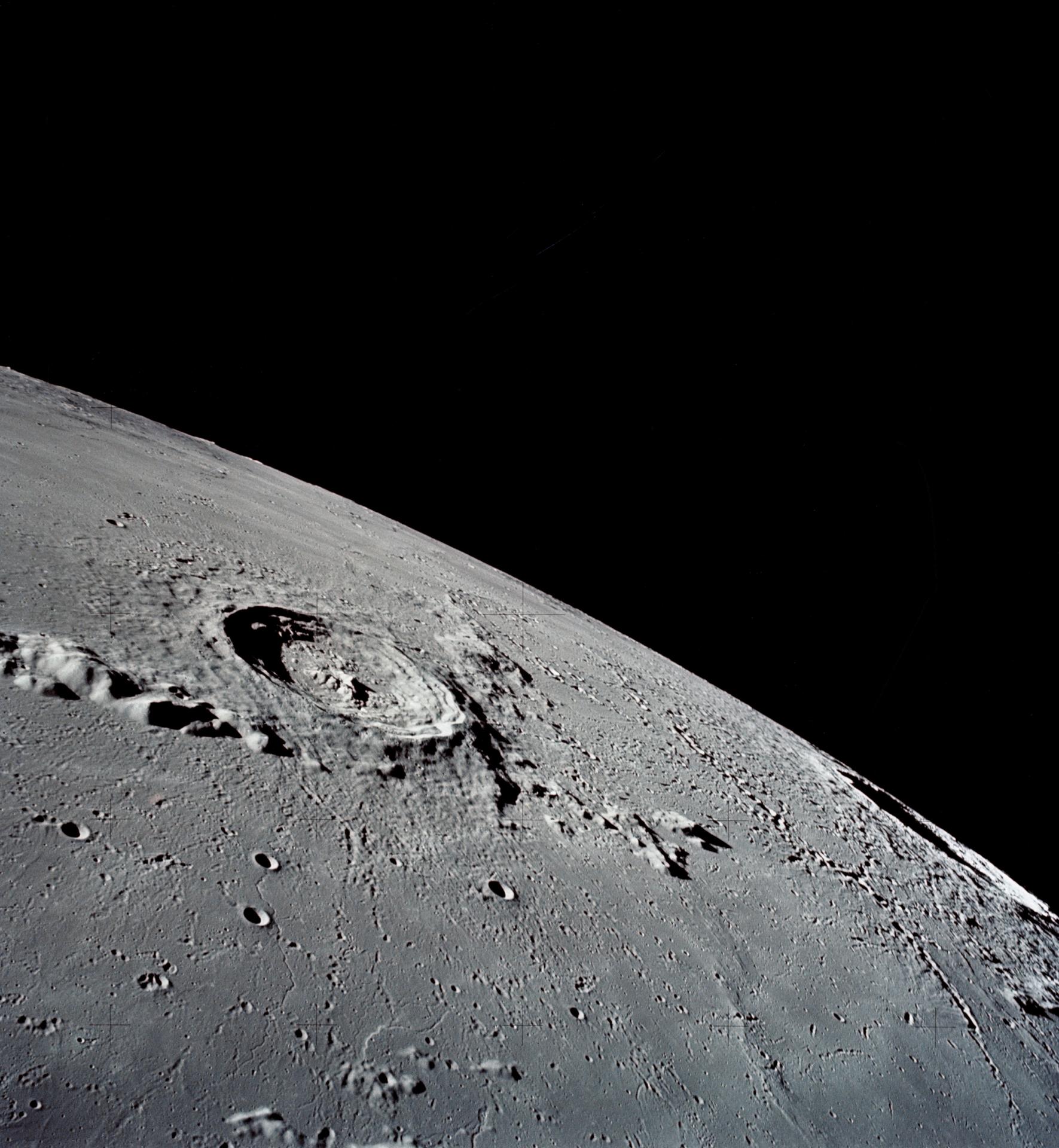
Most children’s telescopes sold in toy shops and supermarkets are frustrating instruments that produce disappointing views and end up unused within a month. The same €80 spent on the right scope shows craters on the Moon with genuine detail, Saturn’s rings as a distinct structure, and Jupiter’s four Galilean moons — things that create lasting curiosity rather than killing it.
This guide is age-specific, honest about limitations, and focused on what each instrument actually shows rather than what the packaging claims.
| Telescope | Price | Age | Best for |
|---|---|---|---|
| Celestron FirstScope | ~€45 | 7–12 | First telescope, Moon nights |
| Bresser Junior 70/900 | ~€72 | 9–13 | Solid step without overspending |
| Celestron AstroMaster 70AZ | ~€100 | 10–14 | Long-term real use |
| Celestron StarSense Explorer LT 70AZ | ~€140 | 10–14 | App-assisted pointing |
The Single Rule That Determines Everything
Any telescope marketed by magnification rather than aperture is a trap. “450× zoom!” means nothing. What matters is the diameter of the main lens or mirror — the aperture. More aperture means more light, which means brighter images and more detail. A 70mm refractor at 50× shows more than a 50mm refractor at 200×, always. Teach this to any child old enough to understand it, and they’ll make better buying decisions for the rest of their life.
For children specifically: mount stability matters as much as optics. A shaky tripod makes high-magnification observing impossible regardless of the optics. The most common frustration with children’s telescopes is not the lens quality — it’s the vibration. This narrows the selection considerably.
By Age: What Children Can Actually Use
Ages 5–7: Hand-on tracking very challenging. A tabletop Dobsonian on a stable surface they can reach is ideal. Target: the Moon. Nothing else initially needed.
Ages 8–11: Can learn to star-hop, can operate a simple alt-azimuth mount, motivated by finding specific objects. Moon, planets, bright clusters.
Ages 12–14: Can understand polar alignment basics, benefit from equatorial mounts, capable of simple astrophotography with a phone adapter.
The Best Kids’ Telescopes in 2026
Under €50 — Celestron FirstScope (Ages 7–12)
The FirstScope is a 76mm tabletop Dobsonian — a mirror in a simple rocker-box mount. No tripod, no electronics, no batteries. It sits on a table, a wall, or a step, and a child points it with their hands.
This simplicity is the point. Tabletop Dobsonians are inherently stable — no tripod vibration. The 76mm mirror collects meaningful light. At 15× with the included 20mm eyepiece, the full Moon fills the field with visible crater detail. At 38× with the 4mm eyepiece, the crater walls and ray systems become specific, nameable features.
It will not show Saturn’s rings clearly — 76mm and the short focal length (300mm, f/3.9) limit planetary detail. It shows them as an obvious elongation that resolves into rings on good nights. For a child’s first telescope at this price, that is honest performance.
The limitation: It requires a stable surface at the right height for the child. A folding garden table solves this. The two included eyepieces are adequate; a Celestron Omni Plössl 10mm (~€28) as a birthday follow-up gift is the obvious upgrade.
Age range: 7–12, supervised younger.
Price: ~€40–€50, Amazon EU
Under €80 — Bresser Junior 70/900 Refractor (Ages 9–13)
The Bresser Junior line is a European-designed children’s telescope range that takes the optics seriously while keeping prices sensible. The 70/900 (70mm aperture, 900mm focal length, f/12.9) is the same optical formula as the Celestron AstroMaster 70AZ — a competent planetary refractor — but packaged with a mount scaled for children and sold at a lower price.
At 45× (with the included 20mm eyepiece), the Moon is spectacular. At 90× (10mm eyepiece), Jupiter’s two main equatorial bands and all four Galilean moons are visible on a clear night. Saturn’s rings are clearly separated from the disc. These are real results that will produce real excitement.
The alt-azimuth mount is sturdier than typical toy-grade tripods. Vibration settles within 2–3 seconds rather than 10–15. This is the difference between usable and unusable at 90×.
Age range: 9–14. Strong recommendation for the 10–12 range as a first proper telescope.
Price: ~€65–€80, Amazon EU and Bresser.de
Under €130 — Celestron AstroMaster 70AZ (Ages 10–14)
Already reviewed in our beginner telescope guide, the AstroMaster 70AZ earns its place here as the correct telescope for older children who are ready to develop the hobby seriously. It is not specifically designed as a children’s scope, which is exactly why it works: the same optical quality adults use, at a price that does not require adult commitment.
70mm aperture, 900mm focal length, proper all-glass optics (not plastic), alt-azimuth mount that produces acceptable stability at 90×. It comes with two Kellner eyepieces that are the weakest component — an upgrade to a Celestron X-Cel LX 10mm (~€52) makes a visible difference and works well as a subsequent gift.
Age range: 10–14. Also a genuinely useful adult scope if the child’s interest grows quickly.
Price: ~€90–€110, Amazon EU
Under €150 — Celestron StarSense Explorer LT 70AZ (Ages 10–14)
The StarSense Explorer adds app-guided pointing to the AstroMaster formula: the smartphone attaches to a mirror on the scope, the app identifies the star field, and arrows on screen guide the user to any target in the sky. You move the scope manually according to the app’s directions. No electronics in the mount. No batteries beyond the phone.
For children who struggle with finding objects — the most common reason telescopes get abandoned — this solves the problem without removing the physical experience of operating a telescope. The child still moves the scope, still looks through the eyepiece. The app removes the frustration of not knowing where to point.
Optical performance is identical to the AstroMaster 70AZ (same tube), with the addition of the StarSense smartphone dock.
Age range: 10–14, and any adult who wants help finding objects.
Price: ~€130–€150, Amazon EU
What to Avoid
Any refractor with “700×” or “525×” on the box. The maximum useful magnification of a 70mm telescope is approximately 140×. Any telescope claiming higher magnification is marketing a number that produces a blurry, dim image at best.
Plastic lens elements. Check the product description. “Glass optics” or “all-glass optics” should be stated. Plastic lenses produce inferior images, scratch easily, and cannot be cleaned without damage.
Telescopes sold at supermarkets, hypermarkets, or general toy shops. Astronomy telescopes sold through Carrefour, Alcampo, or MediaMarkt are overwhelmingly in the toy-grade category. The two exceptions are cases where a reputable brand (Celestron, National Geographic) has distribution through these channels — check the brand before buying.
Mounts described as “precision alt-azimuth” but sold under €60 with a full telescope. The mount is the component that most often fails at low prices. A €55 complete telescope package cannot contain quality optics AND a quality mount AND quality eyepieces. Something is being compromised. It is usually the mount.
The Gift Combination That Works
For ages 8–11: Celestron FirstScope (€45) + a printed Moon map (€8) + a clear night. The Moon map creates an immediate project — find three named craters tonight.
For ages 10–14: Bresser Junior 70/900 (€75) or Celestron AstroMaster 70AZ (€100) + “Turn Left at Orion” junior edition or “NightWatch” by Terence Dickinson as the observing guide. The telescope and the book together create a structured hobby, not an isolated toy.
For the full children’s space gift picture, see Best Space Science Kits for Kids 2026 and Best Space Books for Children 2026.
Some links on this page are affiliate links. If you purchase through them, Orion News earns a small commission at no extra cost to you.
Related articles
Green Propellant vs Hydrazine: How Arkadia Space's In-Orbit Test Changes Satellite Propulsion
Arkadia Space's in-orbit green propellant test validates a non-toxic hydrazine replacement for small satellites. Here's how high-performance green propellants compare to hydrazine — and why the industry is finally switching.
Read →AnalysisThe 25-Year Deorbit Rule: Why the Main Space Debris Standard Is Failing
The 25-year post-mission deorbit guideline was adopted in 2002 to control debris growth in LEO. Historical compliance has been ~50%. Mega-constellations of thousands of satellites have made the rule's underlying assumptions obsolete — and regulators are responding.
Read →GearBest LEGO Space Sets for Kids 2026: City, Creator and Technic Ranked
Best LEGO space sets for kids in 2026 — City Space, Creator 3-in-1 and junior Technic ranked by build quality, play value and educational content. Ages 5–14, EU prices.
Read →